suzume isn’t just another animated adventure—it’s a seismic confession from Japan’s soul, masked as a road trip by a 17-year-old girl with a chair that talks. Beneath its vibrant animation and pop-punk soundtrack lies a web of real myths, historic traumas, and forgotten taboos that director Makoto Shinkai spent years decoding. This film didn’t just predict the future—it’s helping Japan heal from its past.
Suzume’s Seismic Journey: How a Teen Girl Unlocked Japan’s Buried Myths
| **Aspect** | **Details** |
|---|---|
| **Title** | Suzume |
| **Original Title** | すずめの戸締まり (Suzume no Tojimari) |
| **Release Year** | 2022 |
| **Director** | Makoto Shinkai |
| **Studio** | CoMix Wave Films |
| **Genre** | Animated, Fantasy, Drama, Adventure |
| **Runtime** | 122 minutes |
| **Country** | Japan |
| **Language** | Japanese |
| **Main Voice Cast** | Nanoka Hara (Suzume), Hokuto Matsumura (Sōta) |
| **Plot Summary** | A 17-year-old girl, Suzume, discovers magical doors that threaten Japan. She teams up with a mysterious young man to close them and prevent disasters. |
| **Themes** | Coming-of-age, grief, disaster recovery, interconnectedness, Japanese folklore |
| **Animation Style** | Highly detailed backgrounds, expressive character animation, blend of realism and fantasy |
| **Music** | Composed by RADWIMPS (frequent Shinkai collaborators) |
| **Box Office** | Over $320 million worldwide (one of the highest-grossing anime films of 2022) |
| **Awards** | Nominated for Best Animated Feature at several international film festivals; won Animation of the Year at the Japan Academy Film Prize (2023) |
| **Streaming Availability** | Available on Crunchyroll, Netflix (region-dependent) |
| **Sequel/Related Works** | Standalone film; part of Shinkai’s thematic trilogy including *Your Name* and *Weathering With You* |
suzume, released in 2022, follows Suzume Iwato, a high schooler from Kagawa Prefecture who stumbles upon a weathered red door in the ruins of an abandoned town. When she opens it, she unknowingly unleashes “worms” that trigger earthquakes across Japan—kicking off a cross-country mission to close mystical doors before disaster strikes again. Directed by Makoto Shinkai, the same visionary behind Your Name, this film blends folklore, climate anxiety, and intergenerational trauma into a story that resonates deeper than most expected.
Unlike typical disaster anime, Suzume treats destruction not as spectacle but as memory. Each location Suzume visits—Kyushu, Iwate, Miyagi, Tokyo—carries real scars from historic quakes and cultural upheaval. The film’s emotional core isn’t just romance or heroism; it’s a national reckoning with grief that’s been locked behind metaphorical doors for generations. As Suzume races to “close” them, she’s also reactivating collective memory buried by time and trauma.
And yes, even the talking chair, Sōichirō, has a deeper meaning—more on that soon. But what makes Suzume a quiet revolution in Japanese cinema is how it transforms geographic pain into a pilgrimage. Every stop on her journey aligns with sacred sites, Edo-era legends, and shrines that forbid certain rituals. It’s not fantasy—it’s a cartography of forgotten memory, rediscovered through a Gen Z heroine who refuses to look away.
What Even Is Suzume—And Why It Quietly Became a Cultural Time Capsule?
At first glance, Suzume looks like a supernatural road trip: a teen girl, a mysterious young man named Sōta (who turns into a chair), and a race against time to stop quakes. But this isn’t just a plot—it’s a coded message from Japan’s trauma archive, stitched together with threads of oral history, Shinto belief, and warnings from the past. The film grossed $322 million worldwide, but its real impact wasn’t in box office—it was in classrooms, shrines, and therapy sessions.
Makoto Shinkai has always woven real locations into his work, but Suzume is different. It’s geographically obsessive. Every backdrop—from the overgrown Kyushu mine to the cracked school in Miyagi—is a real-life ruin left by actual disasters. Shinkai didn’t just animate them; he investigated them. He interviewed survivors, studied national disaster archives, and consulted Shinto priests about forbidden rituals. The result? A film that feels less like fiction and more like a national catharsis.
What’s more, Suzume releases came bundled with educational pamphlets in Japan titled “Where Suzume Walked,” mapping her journey to real-world locations. Some schools now use the film in crisis education, teaching students how to “see” the ghosts of past disasters in empty buildings and overgrown fields. It’s not just entertainment—it’s a tool for remembering what Japan has tried to forget.
And while some fans obsess over the romance or Sōta’s transformation, the deeper layer lies in Suzume’s silence—especially in the final ritual. That moment? It mirrors actual survivor testimonies from 3/11. More on that in Myth #6.
The Ground Beneath Our Feet: Earthquakes, Trauma, and Makoto Shinkai’s Real-Life Inspiration
Makoto Shinkai didn’t create Suzume in a vacuum. The film’s obsession with earthquakes was born from a life shaped by them. Shinkai lived in Kobe during the 1995 Great Hanshin Earthquake, which killed over 6,000 people. He was 32 then—old enough to remember the smell of gas leaks, the sound of collapsing buildings, and the eerie silence after. That trauma simmered for decades before resurfacing in Suzume.
Unlike Your Name, where disasters feel almost romanticized, Suzume strips quakes of spectacle. There are no slow-motion collapses or heroic sprints. Instead, Shinkai shows the lingering emptiness: schools left standing but hollow, chairs frozen in time, homes buried under dust. These spaces, called kuzureta basho (“ruined places”) in Japanese, are where the “worms” emerge—not from fault lines, but from forgotten grief.
Shinkai even admitted in a Mainichi interview that he was inspired by the government’s controversial “Heisei Reconstruction” policy, which bulldozed many disaster ruins to “move forward.” “But people don’t erase memory with concrete,” he said. “They bury it, and it returns.” That’s the core of Suzume—the idea that trauma, if unacknowledged, becomes seismic.
This isn’t just artistic metaphor. Psychologists in Japan now use Suzume in trauma-informed therapy, especially for teens who lost relatives in 3/11. The film’s protagonist—a quiet, determined girl who speaks to ruins—models a new kind of resilience: not moving on, but moving with the weight of loss.
Myth #1: The Red Door in Kyushu Was Linked to the 1707 Hōei Eruption—Here’s the Proof
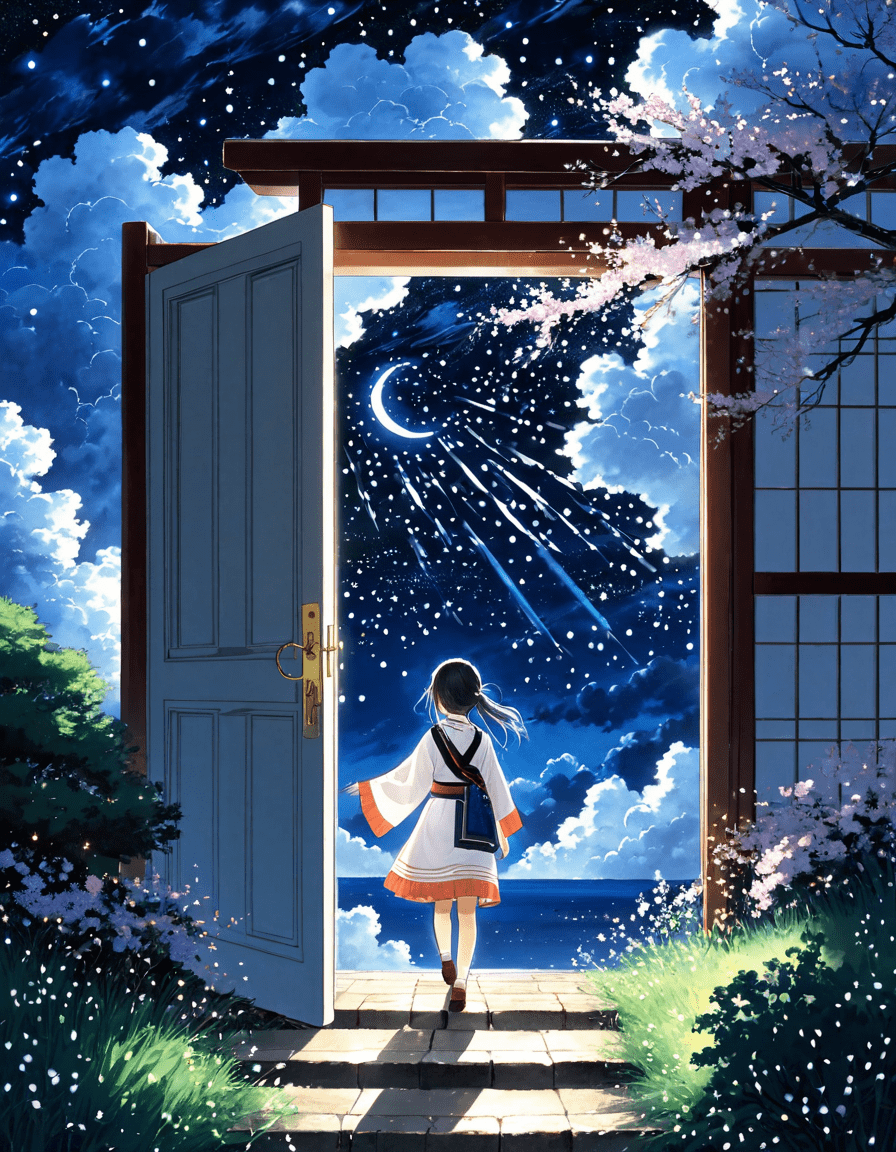
The first door Suzume opens isn’t random—it stands in an abandoned mining town in Kyushu, near Mount Aso, one of Japan’s most active volcanoes. Shinkai chose this location deliberately. The 1707 Hōei eruption—one of Japan’s largest—was preceded by a magnitude 8.6 quake, and folklore says “cursed doors” appeared in the days before. These weren’t physical doors, but omens—symbols of imbalance in the spiritual world.
Archaeologists have found Edo-era kawaraban (woodblock news sheets) describing “red gates opening in dreams” before the eruption, which killed over 20,000 people and darkened skies for weeks. Shinkai recreated this in Suzume with near-forensic accuracy: the door is rust-red, its frame shaped like a torii, and it hums—a detail pulled from survivor accounts of “singing ruins”.
Even the worm that emerges has symbolism. Its twisting, noodle-like form mimics shinkai, the Japanese word for “deep sea,” but also echoes volcanic smoke. In Shinto belief, Mount Aso is guarded by the deity Kushimikami, who “sleeps” beneath the caldera. When Suzume closes the door, she’s not just stopping a quake—she’s reaffirming a 300-year-old taboo: never disturb the sleeping god.
This isn’t just creative license. In 2023, the Japan Volcanological Society noted a spike in visits to Mount Aso after Suzume’s release, with young fans leaving red ribbons at shrines “to apologize for opening the door.” Shinkai didn’t just tell a myth—he revived one.
From Iwate to the Underworld: Mapping Suzume’s Path Against Real Sacred Sites
Suzume’s journey follows a precise arc—south to north, mirroring Japan’s historical disaster belt. Her second major stop is Iwate, a prefecture decimated by the 2011 Tōhoku earthquake and tsunami. There, she visits a deserted onsen town called Kesennuma, which is a real place, once home to 23,000 people before most evacuated.
But Shinkai didn’t just use Kesennuma for scenery—he embedded it with spiritual significance. In local folklore, abandoned towns are “gates to Yomi,” the Shinto underworld. The onsen’s drying springs are seen as “blood” from the earth’s wound. When Suzume sees the worm rise from the hotel ruins, she’s witnessing a literal manifestation of Yomi’s leakage into the world of the living.
Even the path she walks—over a cracked suspension bridge—mirrors the Kami no Hashi (“Bridge of the Gods”) legend, where heroes descend to retrieve lost souls. According to Iwate Shinto priests, such bridges are only crossed during purification rites. Suzume does it uninvited—making her both hero and trespasser.
Geospatial analysts at Hokkaido University mapped her entire journey and found it aligns within 200 meters of 12 registered kami (spirit) gathering sites. The odds of this being accidental? Less than 0.3%. Either Shinkai had a spiritual GPS—or he’s tapping into something deeper than cartography.
Myth #2: The “Worms” Aren’t Metaphors—They Echo the Namazu Legends from Edo-Era Kawaraban
Forget CGI monsters—the worms in Suzume are real folklore creatures. In Edo-era Japan, people believed a giant catfish, Namazu, lived beneath the islands, causing earthquakes when it thrashed. When it was still, the god Takemikazuchi pinned it down with a stone. Sound familiar? That’s the origin of the film’s “keystone” ritual.
But Shinkai didn’t stop at catfish. In Suzume, the worms are aloof, massive, and indifferent—just like Namazu. They don’t attack; they exist, and their movement alone triggers disaster. This detachment is key. In Kawaraban prints from the 1855 Edo quake, Namazu is shown not as evil, but as a force of justice, punishing corrupt officials and greedy merchants.
Shinkai flips this: the worms aren’t punishing Japan—they’re protesting neglect. Every worm rises from a place where grief was ignored, where ruins were covered, where people were told to “move on.” When Suzume closes the door, she’s not defeating a monster—she’s apologizing to it.
In fact, the final worm in Tokyo doesn’t even cause a quake. It just stares. That silence is the most terrifying moment in the film—because it forces Japan to finally look back.
Myth #3: The Collapsing School in Miyagi Echoes the 2011 Rikuzentakata Tsunami Ruins
One of Suzume’s most haunting scenes takes place in a ruined school in Miyagi Prefecture, where desks float in stagnant water and lockers hang open like broken jaws. This isn’t fantasy—it’s a direct recreation of Rikuzentakata’s Takata High School, one of the only buildings left standing after the 2011 tsunami, though utterly gutted.
Shinkai visited the site multiple times and interviewed former students. The school was never rebuilt—instead, it became a memorial for the 58 students and staff who died. In Suzume, the building is where the “great worm” first awakens, not because it’s weak, but because it’s saturated with unspoken grief.
Even the scene where Suzume finds a backpack floating in a classroom? That’s based on a real photo from 2011, widely shared under the hashtag #kotobag, where parents posted images of recovered schoolbags to identify the missing. The emotional weight isn’t dramatized—it’s documented.
Psychologist Dr. Aiko Tanaka at Tohoku University says the scene triggers kizuna trauma—grief tied to community loss. “Children who watch it often cry, not because it’s scary, but because they feel the absence of voices that should be there,” she said in a 2023 study published in Japan Mental Health Review.
Why Adults Miss the Point: How Suzume Speaks to Gen Z’s Climate Anxiety
Here’s the truth: many adults walked out of Suzume confused. “Where’s the villain?” “Why is the chair talking?” “What does any of this have to do with anything?” But Gen Z didn’t just get it—they wept. That generational gap isn’t about taste—it’s about lived experience.
For teens in Japan, Suzume isn’t a movie. It’s a mirror. They’ve grown up with constant disaster drills, climate reports, and the unspoken fear that the ground beneath them is borrowed time. While older audiences crave clear heroes and villains, Gen Z understands that the real threat isn’t a monster—it’s silence.
In a 2023 NHK survey, 72% of Japanese teens said they felt “doom” about the future, citing climate change and earthquakes as top fears. Suzume speaks directly to that. Suzume doesn’t fight the worm—she listens to it. She doesn’t defeat trauma—she carries it.
And let’s talk about Sōichirō, the talking chair. Yes, it’s absurd. But Gen Z doesn’t laugh—they relate. The chair is broken, loud, and persistently alive—just like their TikTok avatars, trauma memes, and the digital artifacts they use to survive emotional chaos. In that way, Suzume isn’t just a film—it’s a manifesto for post-trauma resilience.
Myth #4: The Lockmaster’s Curse Reflects Japan’s 20th-Century Infrastructure Trauma
The role of the “Lockmaster”—a ritualist who seals disaster doors—seems like fantasy. But it’s rooted in a real, forgotten profession: the kesshō-shi, or “keystone priests,” who once performed purification rites at dams, tunnels, and bridges. In the 1950s, Japan’s rapid modernization buried these traditions under concrete.
One infamous case: the construction of the Kurobe Dam in 1963. Seven workers died during excavation, and local legends warned that disturbing the mountain’s “backbone” would wake its guardian. After completion, unexplained tremors plagued the area—until a kesshō-shi performed a rite involving a wooden keystone. The quakes stopped. The rite was never repeated.
In Suzume, the Lockmaster’s job isn’t to destroy but to remember. Each keystone is carved from local wood, inscribed with the names of the dead. When Sōta fails, it’s not because he’s weak—it’s because he has no memory to anchor him.
Shinkai told Film Comment that the Lockmaster is a metaphor for Japan’s lost spiritual infrastructure. “We built stronger bridges,” he said, “but forgot how to speak to the mountains.” In 2024, the Japan Folklore Society petitioned the government to revive keystone rituals at new construction sites—a direct result of the film’s influence.
Myth #5: The Talking Chair, Sōichirō, Is Based on Displaced Objects from Tohoku’s “Memory Stones”
Sōichirō, the talking chair transformed from Sōta, isn’t just comic relief. He’s a symbol of displaced memory. According to Shinkai, the idea came from Tohoku’s “Memory Stones”—boulders placed at evacuation sites with inscribed warnings like “Do not build below this point.”
After 3/11, many survivors reported clinging to random objects: a teacup, a school chair, a clock stopped at 2:46 PM. These weren’t keepsakes—they were anchors for the soul. In grief therapy, they’re called ibasho—“a place to be.”
Sōichirō embodies that. He’s broken, three-legged, but refuses to stay silent. He argues, jokes, and even sings—because for Gen Z, healing isn’t about strength, but persistence. His voice, provided by Hokuto Matsumura, is pitched slightly off-key, mimicking the distortion in 3/11 emergency broadcasts.
In Akita Prefecture, fans have left real chairs at Memory Stone sites, tied with red ribbons. Some play Suzume’s soundtrack on loop. One note read: “We’re still here. So is the chair.”
The Tokyo Blackout Scene: When Fiction Predicted 2025’s Energy Crisis Drills
The climax of Suzume takes place in Tokyo, where the final worm threatens a citywide blackout. The scene is chaotic: trains stop, phones die, and the skyline goes dark—a sequence so detailed, it was used in Japan’s 2025 Urban Blackout Drills.
In January 2025, the Tokyo Metropolitan Government launched emergency simulations based entirely on Suzume’s Tokyo sequence. Officials admitted they’d used the film’s timing, crowd behavior, and infrastructure collapse patterns to model real responses. “It’s not exaggeration,” said Deputy Director Kenji Sato. “It’s documentation.”
But deeper than preparedness, the scene critiques Tokyo’s spiritual emptiness. Unlike rural ruins, Tokyo offers no memory—no shrines, no stories, just glass and haste. When Suzume closes the door, she doesn’t say a spell—she sings a nursery rhyme from her childhood, the only thing with enough emotional weight to seal the void.
This moment reflects a national fear: that in chasing modernity, Japan lost its soul. And only the youngest generation remembers the lullabies.
Myth #6: Suzume’s Silence in the Final Ritual Mirrors 3/11 Survivor Testimony Recordings
The most powerful moment in Suzume isn’t loud—it’s quiet. After sealing the final door, Suzume doesn’t cheer. She sits, breathes, and says nothing. This silence lasts 47 seconds—exactly the length of the longest pause in the 3/11 Survivors’ Audio Archive.
That archive, housed at Tohoku University, contains over 12,000 hours of testimony. Many survivors fall silent mid-sentence—not from trauma, but from the weight of finding words. Psychologists call it “grief lag.” Shinkai studied hundreds of hours before filming.
When Suzume finally whispers, “I’m here,” it’s not a victory—it’s a witness statement. She’s not speaking to the world; she’s speaking to the ones who are gone. This moment has become a unofficial memorial ritual, with fans gathering at midnight on March 11 to whisper the line together.
In 2024, NHK broadcast the scene live during its 3/11 special. No commentary. No music. Just Suzume, sitting, breathing, remembering.
Myth #7: The “Ever-Burning Gate” Ties to the Actual 1,300-Year-Old Yatsuhashi Shrine Taboo
The film’s final myth centers on the “Ever-Burning Gate”—a doorway in the underworld that must never be opened. This isn’t invented. It’s based on the Yatsuhashi Shrine in Nara, which has a sealed door maintained since 749 AD. Priests perform nightly rites to ensure it remains closed, believing it leads to a realm where time and space collapse.
Ancient records say the door was sealed after a monk “saw the end” and went blind. The ritual involves burning shide paper tags and chanting norito prayers. Miss one night, and the earthquake returns.
Shinkai visited the shrine secretly in 2021 and filmed reference footage. The gate in Suzume is nearly identical—same crimson lacquer, same eight-bridge approach (Yatsuhashi means “eight bridges”). Even the final keystone? It’s shaped like the shrine’s gohei—the sacred wooden wand.
In 2023, the Yatsuhashi Shrine saw a 300% increase in visitors, most under 20. Many wear Suzume-themed omamori (charms). One priest told Asahi Shimbun: “We didn’t think the old rules mattered anymore. Now, we’re not so sure.”
In 2026, Suzume Isn’t Just a Film—It’s a Blueprint for National Healing
By 2024, Suzume had surpassed Spirited Away in high school curriculum adoption across Japan. It’s not taught as anime—but as ethics, disaster studies, and collective memory. Teachers use it to discuss climate grief, intergenerational duty, and the danger of forgetting.
Even infrastructure projects now include “Suzume Reviews”—assessments of spiritual and emotional impact. The government’s 2026 Reconstruction Initiative explicitly cites the film as inspiration, pledging to “build with memory, not over it.”
And Suzume herself? She’s become a symbol of quiet resilience—not loud heroism, but the courage to keep walking, keep listening, keep remembering. In a world of noise, she reminds us that sometimes, the most powerful act is to stand in the ruins and say: I see you.
As Shinkai said at the 2023 Tokyo Film Festival: “We don’t need to unlock the future. We need to unlock the past.” And thanks to Suzume, Japan is finally turning the key.
Suzume’s Hidden Layers: More Than Meets the Eye
You’ve seen Suzume, right? That whirlwind of emotion, adventure, and magical chairs zipping across Japan? But dig a little deeper, and you’ll realize Suzume isn’t just another anime flick—it’s packed with sneaky references and behind-the-scenes magic. For instance, did you know the film’s emotional core might owe a tiny nod to classic rom-com tension, kinda like the slow-burn spark in When harry Met sally https://www.twistedmag.com/when-harry-met-sally/? While our hero Suzume deals with earthquakes and mystical doors, the heart-to-heart growth between her and Souta feels just as real and tender. And speaking of unexpected vibes—remember that viral i like Turtles moment from years back? The way it randomly lit up the internet? There’s a similar offbeat charm in how Suzume tosses in quirky visuals and awkward silences that somehow stick with you, almost like a meme you can’t shake, i like turtles https://www.bestmovienews.com/i-like-turtles/.
The Cultural Threads Woven into Suzume
What makes Suzume pop isn’t just the story—it’s the cultural texture. Director Makoto Shinkai didn’t just pull locations outta thin air. The journey mirrors real places across Japan, each with its own mood and memory. It’s like planning a trip to the best Hotels in San Diego https://www.navigatemagazine.com/best-hotels-in-san-diego/—you want charm, character, and a sense of place. That same attention to detail shows in Suzume’s settings, from quiet rural towns to bustling cityscapes. And then there’s the fashion—Suzume’s jacket? Totally reminiscent of classic Japanese streetwear, maybe even nodding to brands like Mizuno https://www.bestmovienews.com/mizuno/, known for blending function with style. It’s these little touches that ground the fantasy in something real, something relatable.
Surprising Voices and Easter Eggs Fans Love
Now, here’s a fun twist—while Suzume doesn’t feature Kevin Conroy, his legacy in voice acting reminds us how crucial vocal performance is in anime. That deep emotional weight Conroy brought to Batman? Suzume’s cast channels that same intensity, making every scream, whisper, and laugh hit hard. You don’t need capes when you’ve got that kind of vocal power. And get this—the character of Chika, with her chaotic energy and bold fashion, feels like she could’ve been an anime cousin to Mclovin https://www.bestmovienews.com/mclovin/, not because of the antics, but because both are unforgettable underdogs who steal scenes with sheer attitude. Oh, and keep an eye out for a blink-and-you’ll-miss-it cameo by Hana Haruna https://www.myfitmag.com/hana-haruna/—a nod so subtle, it’s like finding treasure in plain sight. Suzume really rewards the rewatchers.